.png)





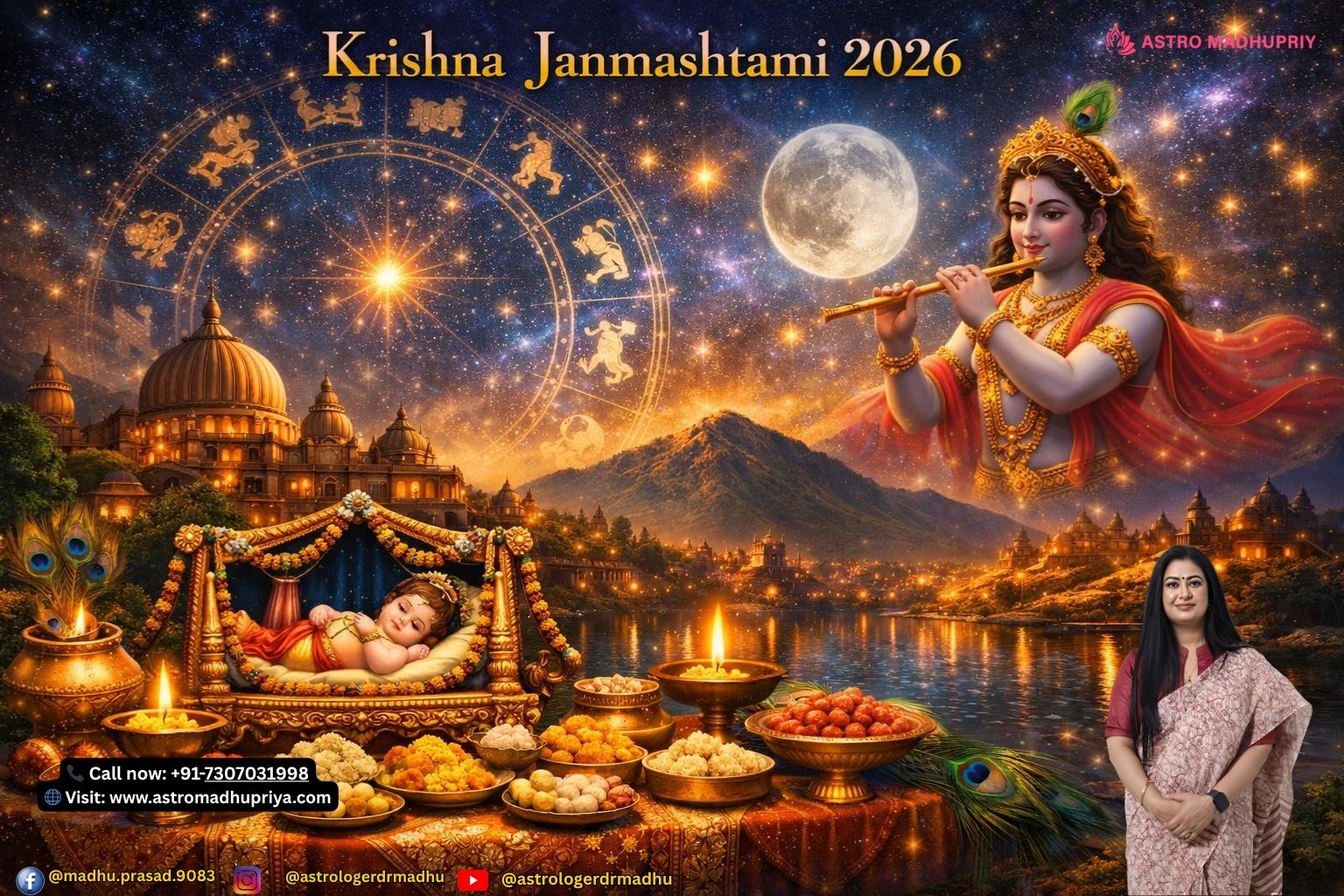
Krishna Janmashtami 2026 is one of the most sacred and widely celebrated Hindu festivals, marking the divine birth of Lord Krishna, the eighth incarnation of Lord Vishnu. Celebrated with immense devotion across India and globally, this festival symbolizes the victory of righteousness over unrighteousness and the power of divine love.
In this comprehensive guide from Astromadhupriya, you will discover the exact date, puja muhurat, rituals, spiritual meanings and deep astrological insights for Janmashtami 2026. Whether you are looking for auspicious time or secret remedies to improve your horoscope, this guide covers everything you need to know about Krishna Janmotsav 2026.
Krishna Janmashtami 2026 date and time
The alignment of the stars and the calendar determine the exact strength of this day. In 2026, the cosmic configuration is particularly auspicious for those seeking spiritual growth and material prosperity.
Primary date: Friday, September 4, 2026
Ashtami Tithi Start: 4 September 2026 at 03:01 am
Ashtami Tithi ends: 5th September 2026 at 01:14 am
Rohini Nakshatra Start: 4th September 2026 at 07:15 PM
Rohini Nakshatra ends: 5th September 2026 at 05:40 PM
Midnight Nishita Puja Timings: 12:03 AM to 12:47 AM (44 minutes duration of maximum power)
“Janmashtami 2026: 4th or 5th September?” > Answer: While Ashtami Tithi is prevalent on 4th, Vaishnav Janmashtami (celebrated by ISKCON and specific sects) may fall on 5th September 2026. For householders wishing to keep pace with the midnight birth, the night of the 4th is the primary window for celebrations.
Divine Incarnation: Why is Janmashtami celebrated?
Krishna Janmashtami marks the birth of Yogeshwar Krishna, who incarnated on earth in the prison cell of Mathura 5,000 years ago. His incarnation served three primary cosmic purposes:
Destruction of Tyranny: Ending the cruel rule of King Kansa and other demonic powers.
Restoration of Dharma: Establishing a world ruled by Dharma rather than ego.
Spiritual Enlightenment: Delivering the Bhagavad Gita, a Timeless Handbook for Human Consciousness.
Krishna is not just a god; He is the complete incarnation (complete manifestation of God). He represents the bridge between the human and the divine, showing us that one can live in a world of material duties while remaining completely detached and blissful.
Spiritual and astrological significance of 2026
From an astrological point of view, Janmashtami 2026 has great significance. Lord Krishna was born in Rohini Nakshatra in Vrishabha Lagna (Taurus ascendant). When the Moon enters this position during the festival, it creates “Harshana Yoga” which facilitates deep emotional healing and expression.
Ashtami Tithi: Ruled by Rahu, this tithi usually represents struggle, but the birth of Krishna transforms it into a day of inner awakening and victory over shadow.
Rohini Nakshatra: Ruled by the Moon and associated with fertility, growth and beauty. Worshiping Krishna during this Nakshatra strengthens one’s own Moon (Manas) and Venus (Shukra).
Nishita Kaal: The time of midnight represents the point where the greatest light emerges from the deepest darkness.
Astromadhupriya Insight: This year, planetary alignments suggest that Janmashtami is highly favorable for those struggling with Pitra Dosh or Chandra Dosh. Rituals performed at midnight can help stabilize erratic emotions and bring clarity to a career path.
Janmashtami 2026 Puja Vidhi (Step-by-Step Ritual Guide)
To get the full benefit of this high-vibration day, follow this traditional worship method created for modern devotees:
- Morning preparation (resolution)
Wake up during Brahma Muhurta (about 4:30 am).
Take bath with water mixed with Ganges water and black sesame seeds.
Make a resolution: Keep water in your right palm and resolve to observe the fast with devotion.
- Fasting rules
Nirjala: Fasting without water (for advanced practitioners).
Fruitarian: Consuming only fruits, milk and water.
Avoidance: Grains, salt (except rock salt), onion, garlic and non-vegetarian food.
- Setting up the altar
Place a beautiful cradle (swing) in your puja room.
Install the idol of Laddu Gopal (Child Krishna).
Decorate the area with peacock feathers (mor pankh), flute (basuri), and fresh flowers (preferably parijat or lotus).
- Midnight Maha-Pooja (Nishita Kaal)
This is the moment when Krishna was born.
Abhishek: Bathe the idol with Panchamrit (milk, curd, honey, ghee and sugar) while chanting “Om Namo Bhagwate Vasudevaya”.
Adornment: Dress the Lord in new yellow silk clothes and jewellery.
Offering: Offer butter-mishri, Panjiri and 56 types of food (Chhappan Bhog). Don’t forget the basil leaves, because without them Krishna does not accept food.
Aarti: Perform “Kunj Bihari Aarti” with ghee lamp and incense.
Parana: Break your fast by drinking Charanamrit after midnight puja.
Regional flavour: how India celebrates
The beauty of Janmashtami 2026 lies in its diversity. Throughout the Indian subcontinent, the “Dark One” is welcomed with various traditions:
Dahi Handi (Maharashtra): Huge human pyramids are formed to break curd pots hung above the streets, imitating Krishna’s childhood theft of butter.
Tableaux (Mathura and Vrindavan): Elaborate “tableaux” depicting scenes from the Bhagavata Purana are seen at the birthplace of Krishna. The atmosphere of Brijbhoomi has become devotional with the chanting of “Radhe-Radhe”.
Raas Leela (Manipur and Rajasthan): Professional dancers perform the “dance of divine love”, which represents the soul’s longing for God.
Golu/Kolu (South India): In many South Indian homes, decorative displays of dolls are set up, and small footprints made of rice flour are made from the front door to the puja room, welcoming little Krishna into the home.
Hidden spiritual symbols
Understanding the deep meaning of Janmashtami creates a deep connection:
Prison Cell: Represents the limitations of the human body and the physical world.
King Kansa: Symbolizes ego and tyranny of mind.
Midnight Time: Represents a state of deep meditation where the ego is sleeping, and superconsciousness (Krishna) can be born.
Powerful Astrological Remedies for Janmashtami 2026
According to Astromadhupriya, the planetary alignment on September 4, 2026, provides a rare portal for “karma cleansing.” Perform these depending on your needs:
Purpose, Measure
Financial stability, offer a silver flute to Krishna at midnight and keep it in your locker.
For marital harmony, offer a garland of yellow flowers to Radha-Krishna and chant Radha-Ashtakam.
For the health of children, feed the cow on the morning of Janmashtami and donate milk products.
Success in career, recite 11th chapter of Bhagwat Geeta during Nishita period.
Mental peace, apply sandalwood tilak on the idol and then on your forehead.
Common Mistakes to Avoid
Ignoring the date: Celebrating the festival without checking the Udaya Tithi can reduce the spiritual effectiveness of your fast.
Neglect of Tulsi: In Gaudiya tradition, offering food without Tulsi is considered incomplete.
Harsh speech: Fasting is not only for the stomach but also for the tongue. Avoid gossip or anger on this day.
Sleeping during puja: Try to stay awake at least till 12:30 am to enjoy the divine vibes.
(FAQ)
- Is Janmashtami 2026 on 4th or 5th September?
For most householders (Smarta), the celebration is on September 4, 2026, as the birth of midnight falls within that date. Many temples and Vaishnav followers will celebrate on September 5, 2026. - Can pregnant women keep fast on Janmashtami?
It is not mandatory for pregnant women to observe strict fasting. One can perform the puja and rituals while maintaining a healthy diet of fruits and milk. Devotion is more important than physical suffering. - What is the significance of “Chhappan Bhog”?
“Chhappan Bhog” consists of 56 types of food items offered to Krishna. It represents the 56 dishes that Krishna would have eaten in 7 days while lifting Mount Govardhan (eating 8 times a day). - How can I perform Janmashtami puja if I live in a small apartment?
Krishna values intention more than scale. A small picture or idol, a lamp, a Tulsi leaf, and a sincere chanting of “Hare Krishna” are enough to invite His presence into your home.
5.Which mantra is most powerful on the night of Janmashtami?
Mahamantra: “Hare Krishna, Hare Krishna, Krishna Krishna, Hare Hare / Hare Rama, Hare Rama, Rama Rama, Hare Hare” is the most powerful vibration for this era (Kaliyuga).
Conclusion: Embrace Divine Bliss
Krishna Janmashtami 2026 is not just a date on the calendar; This is a cosmic opportunity to press the “reset” button on your spiritual life. The life of Lord Krishna teaches us that one can remain happy even amidst chaos. By following the puja method and keeping in sync with the Muhurat given by Astromadhupriya, you can invite peace, prosperity and divine protection into your home.
Celebrate the birth of the Blue Lord with a true heart, and let Krishna’s flute play the tune of success in your life!
Get personal guidance from Astromadhupriya
Ready to change your destiny this Janmashtami?
Don’t leave your spiritual growth to chance. If you are facing delay in marriage, financial constraints or mental stress, Krishna’s birth is the best time for horoscope review.
Connect with Astromadhupriya for:
Customized Janmashtami remedies based on your birth chart.
Perfect time to start new ventures.
In-depth information on your Moon sign and Nakshatra.
[Click here to book your consultation now] And make 2026 the year of your divine transformation!